
Our Location
304 North Cardinal St.
Dorchester Center, MA 02124

What to put on a Samhain altar — candles, ancestor photos, seasonal items and where to find them — plus three layouts for a shelf, a table and a flat.
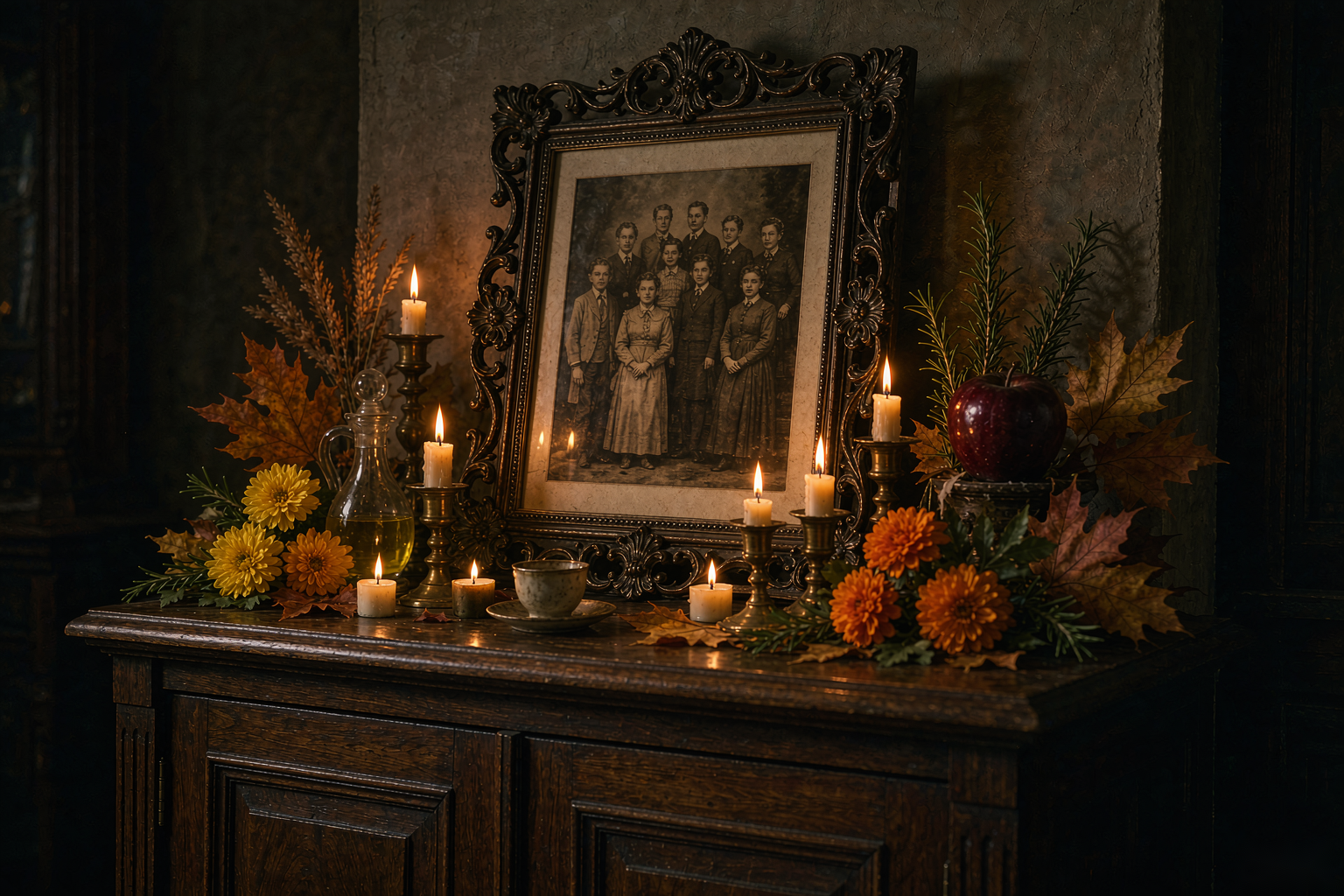
A Samhain altar is a seasonal altar: the same surface you use the rest of the year, redressed for the one night when the tradition says the boundary is thinnest. Where a daily altar is about your practice, a Samhain altar is about the year that’s ending and the people you’re remembering.
That changes the shopping list. The pieces that matter now are light, photographs, and things from the season itself — most of which you already own or can pick up outdoors. What’s left to buy is small: a few candles, a cloth, something to burn things safely in.
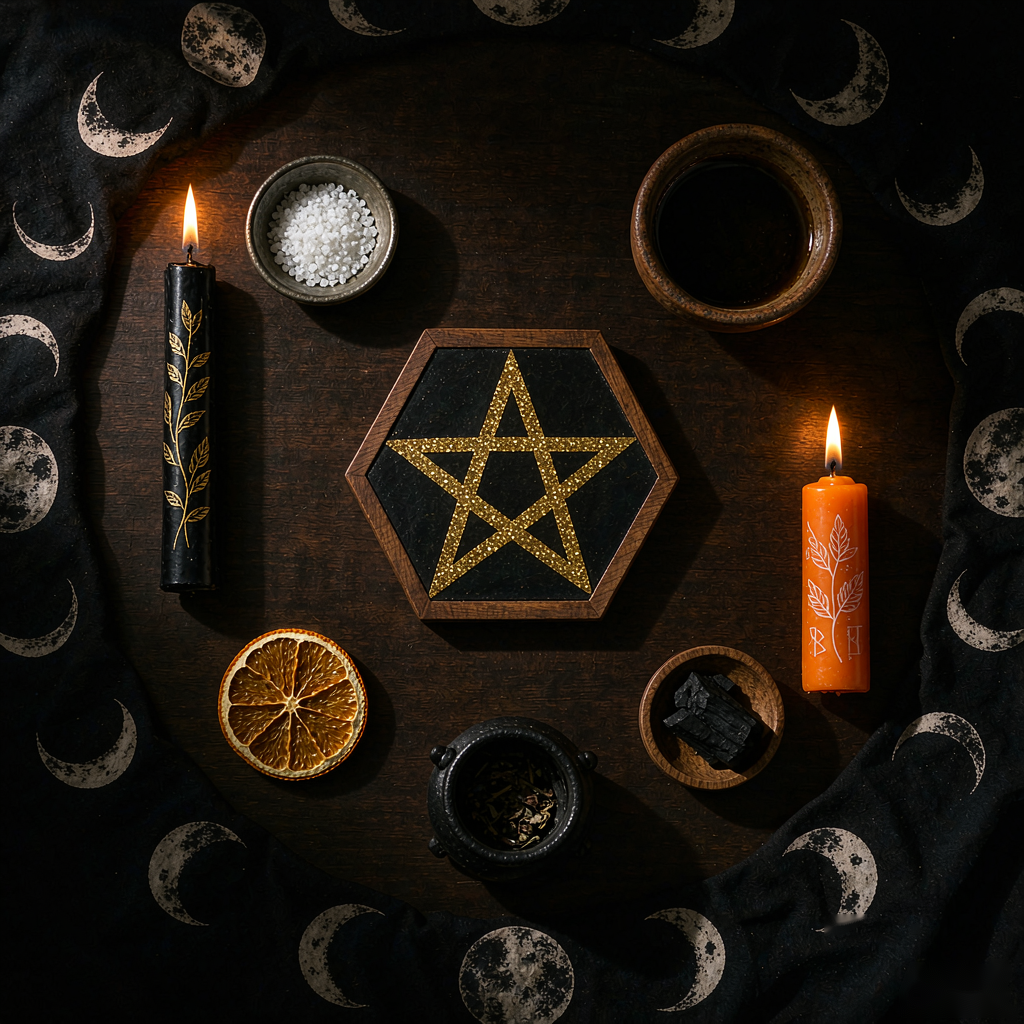
A windowsill, a bookshelf, a side table — any surface you’ll actually look at is correct. If you want a dedicated piece, a pentagram altar table (£74.99) is the only one on our shelves designed for the job, and it works all year rather than just for Samhain. Most people: use what you have.
Dark cloth is the Samhain signal — it visually flips the altar into winter mode. A 70×70cm star sign altar cloth (£13.99) does the job and serves the rest of the year; a plain black scarf or tea towel is equally correct. Skip nothing else here.
The heart of the season. One framed photograph of someone — family, friend, even a pet — turns “Halloween decoration” into a Samhain altar. Add something of theirs: a brooch, a pen, a key. This piece costs nothing and is the one that makes the evening land.
Odd numbers are traditional; two is fine if that’s what fits. Black for endings and protection, orange for the season, white if you want a neutral. A set of 12 black “protection” spell candles (£4.99) covers the whole arrangement plus the windowsill ritual — or 12 white “happiness” candles (£4.99) if you’d rather keep the tone bright.
Dried oak leaves, rowan berries, the last of the rosemary, a bare branch. The traditional Samhain plants are mugwort, rosemary and rowan — all grow in UK gardens. One rule: dried only. Anything fresh will wilt on the altar by night two.
A small dish holding something the person you’re remembering liked — a square of chocolate, an apple, a sip of something. A skull rose tealight holder (£6.99) or a black triple moon cut-out tealight holder (£6.99) does double duty: holder and offering dish in one piece.
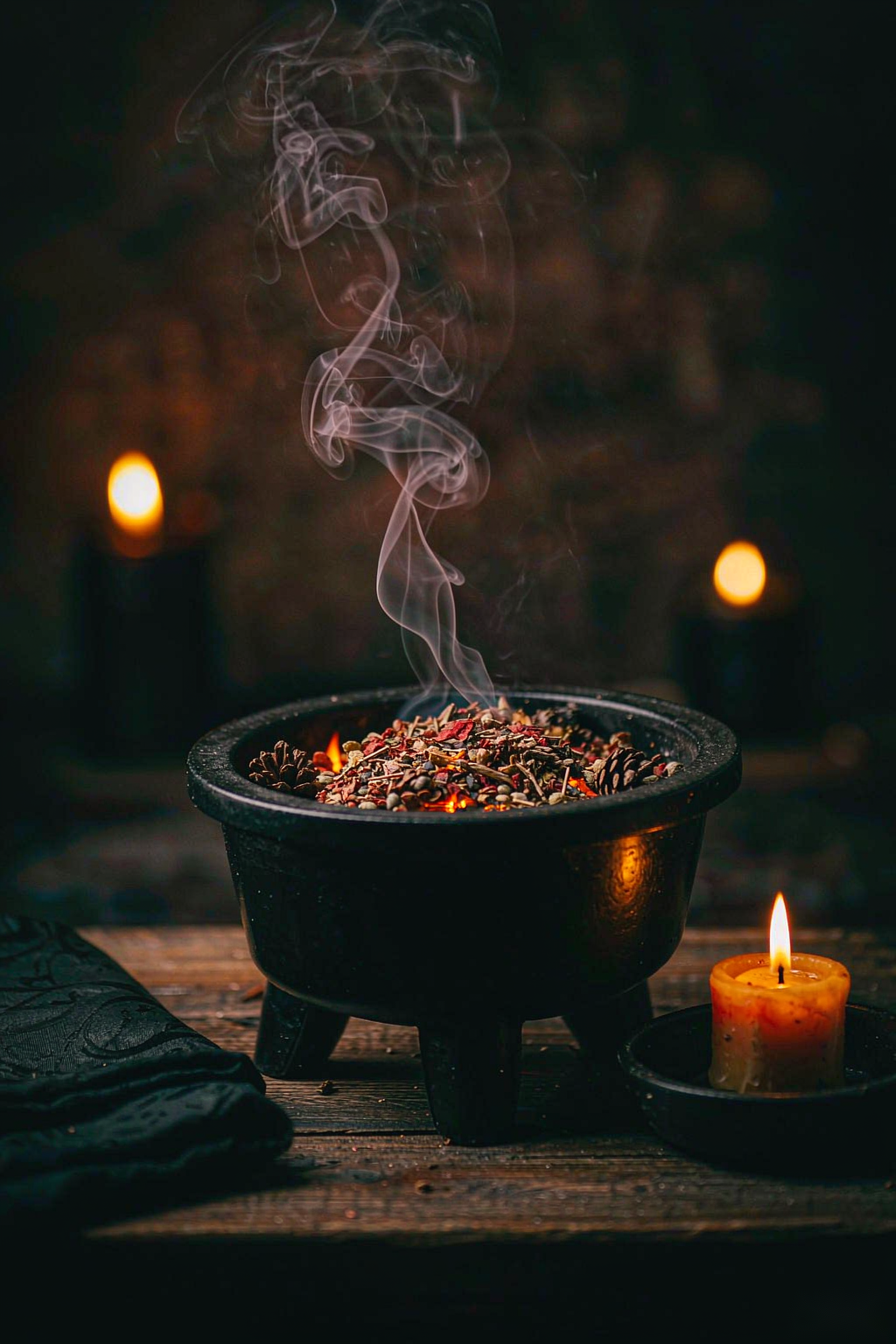
You’ll be burning a written list on the night (the two-list ritual from our Samhain guide). A cauldron oil burner (£7.99) handles the paper the rest of the year and smells nice on a wax melt the rest of the winter. Do not burn paper in or near anything ceramic without a base under it.
One shelf, cloth optional. A black candle, the photo, one sprig of rosemary, and the burn-safe dish. That’s a complete Samhain altar in four objects and it takes five minutes to set up. If it’s the year you’re reading about Samhain rather than planning it, this is the version.
A small table or wide windowsill: cloth, two candles (one black, one orange), the photo and keepsake, an offering dish with an apple, a seasonal sprig, and the cauldron for the burning ritual. Add a pumpkin spice candle (£8.99) unlit until the evening, then light it as the room signal that the night has started. This is the layout in the photograph above, and it covers every ritual in the Samhain guide.
For a year-round practitioner redressing an existing altar: the pentagram altar table as the base, star sign cloth, the full ancestor section (photo, keepsake, offering), four elemental dishes, black and orange candles in odd numbers, a cauldron for burning, and a talking board leaned at the back if divination is part of your night. Everything except the photo is buyable in one shop, which is the point of showing it.
Three things worth saying, because every year someone does one of them:
Take the altar down within the week, or leave the ancestor section up through November — both are common. Compost the leaves and the apple, keep the candles for Yule, wash the dish, fold the cloth. The altar comes apart in ten minutes, which is the quiet test of whether you bought the right pieces: a Samhain altar should pack away into one box.
If this is your first altar of any kind, start there — our guide to building a witch’s altar from scratch covers what a year-round version looks like, and the Samhain version is just its October coat.
Traditions described here come from folklore and modern practice. Nothing on a Samhain altar promises any outcome — it’s a festival, not a service.
Read more: how to build a witch altar.
Read more: how to start a witch’s altar.
Browse our altar accessories category.
Browse our spell candles category.
Browse our cauldrons category.
Shop the black protection spell candles.
Shop the white happiness spell candles.
Shop the triple moon tealight holder.
Shop the cauldron oil burner.
Read more: how to cleanse crystals.
Ready to dive in? Start with altar accessories category, then browse the full shop. Free UK delivery on orders over £30. New here? Join our newsletter for a first-order code.
A dark cloth, an odd number of candles, a photograph and keepsake of someone who has died, something seasonal from outside (dried leaves, rosemary, rowan), and a safe container for burning paper. That’s the core — everything else is optional.
Anywhere you’ll actually see it: a windowsill, a bookshelf or a small table. There’s no rule about compass direction or room — visibility matters more than placement.
Most people set it up on or just before 31 October and take it down within the week. Leaving the ancestor photographs up through November is also common practice.
You need something heat-safe to burn written papers in — a small cauldron on a heatproof base is the traditional tool, but a metal dish works. Never burn paper in glass or near curtains.
Yes — carve a space for the photograph and candles that stays quiet, and let the fun decorations live elsewhere. Mixing them in the same space is what makes altars feel cluttered.
Join our list for a first-order discount and early access to new pieces.
