
Our Location
304 North Cardinal St.
Dorchester Center, MA 02124

A practical guide to setting up your first witch altar — the seven pieces you need, how to lay them out, and what to add later. UK shop links inside.
Most beginner altar guides start with the four elements and end with a shopping list of twenty items. This one starts with the reason most altars get abandoned: people buy too much, arrange it once, and then never touch it again.
An altar works when it has a job. That job might be:
Pick one. Everything below is organised around it.
You can build a working altar with these, in this order. Each one earns its place — nothing here is decoration-only.
| # | Piece | What it’s for | Typical UK price |
|---|---|---|---|
| 1 | A cloth | Defines the space; protects the surface from wax and ash | £8–20 |
| 2 | A candle | The one thing almost every tradition shares: light, focus, and a marker for the working | £2–15 |
| 3 | A holder | Keeps tapers upright and catches wax — this is the piece people forget | £6–15 |
| 4 | Something to hold scent | Incense, a smudge bowl, or an oil burner — clearing the space before you start | £8–25 |
| 5 | A small bowl | For salt, water, ash or offerings | £5–15 |
| 6 | One grounding object | A stone, a statue, a found object — anything that means “this is where I sit” | £5–30 |
| 7 | One thing that’s just yours | A photo, a shell, a note. This is the piece that stops it looking like a shop display | £0 |
That’s it. Not seven categories to fill — seven objects, several of which you may already own.
The two most common mistakes are a cloth that’s too small and a table that’s too shallow.
Cloth, one candle in a holder, a small bowl, and one stone. Set it at the end of a bedside table. This is the layout to start with if you’re unsure whether the practice will stick.
Add a smudge bowl or incense holder, a second candle in a contrasting colour, and a small statue or figurine as the centrepiece. A shelf above a desk works well: you see it while you work, which is when you’ll actually use it.
Cloth, two or three candles, an oil burner, a cauldron or offering bowl, a statue, and a set of stones laid out in a grid. At this level, the arrangement starts to have a logic — usually a centre (the working) and four quarters (the directions or elements).
There’s no single correct arrangement, but three rules prevent most of the mess:
If you want a traditional layout, the four-direction arrangement (north/earth, east/air, south/fire, west/water) is the most common — our guide to starting a witch’s altar explains each quarter in detail.
Browse our cauldrons.
Read more: candle magic for beginners.
If you’re reading this with nothing on the table yet, buy three things: a cloth, a candle with a holder, and a bowl. Put them down. Sit with it for a week before buying anything else — you’ll learn more from that week than from any shopping list, including this one.
Browse our altar cloths.
Browse our spell candles.
Browse our smudge sticks & bowls.
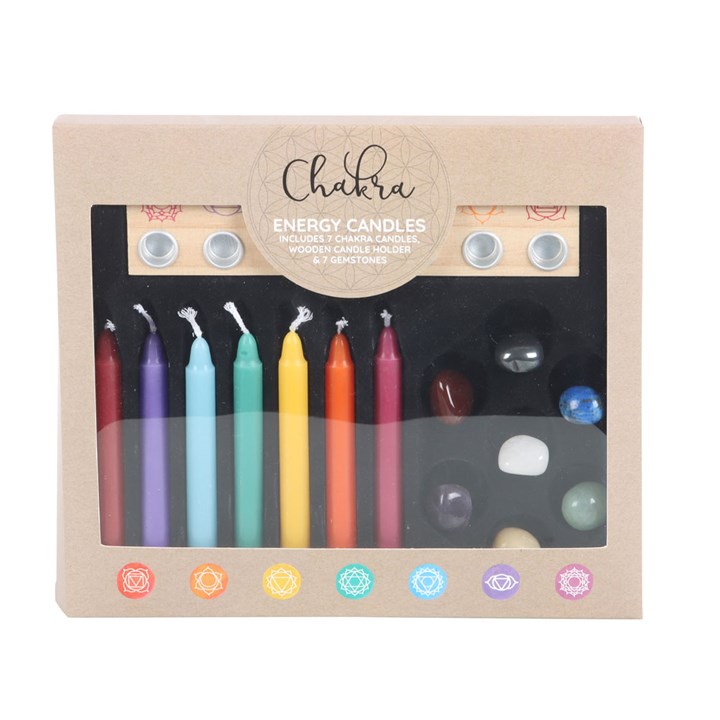
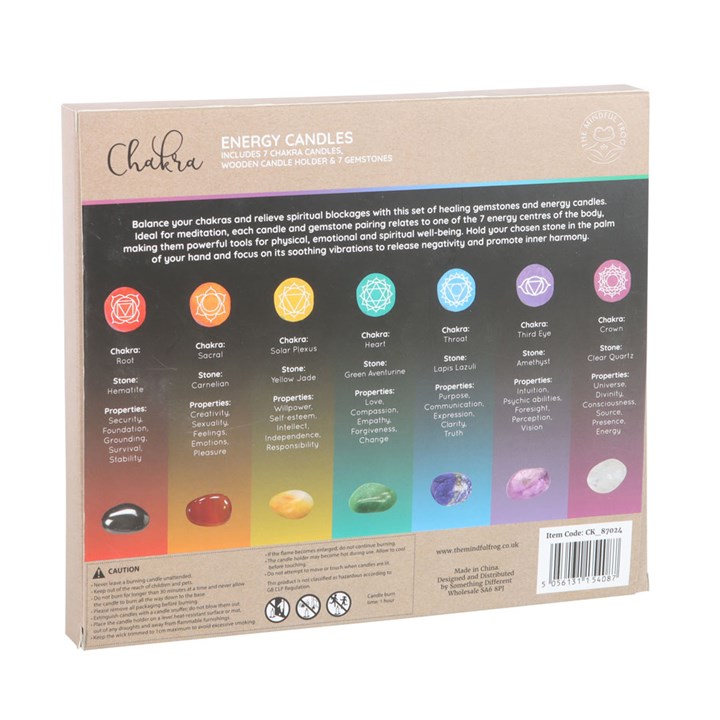
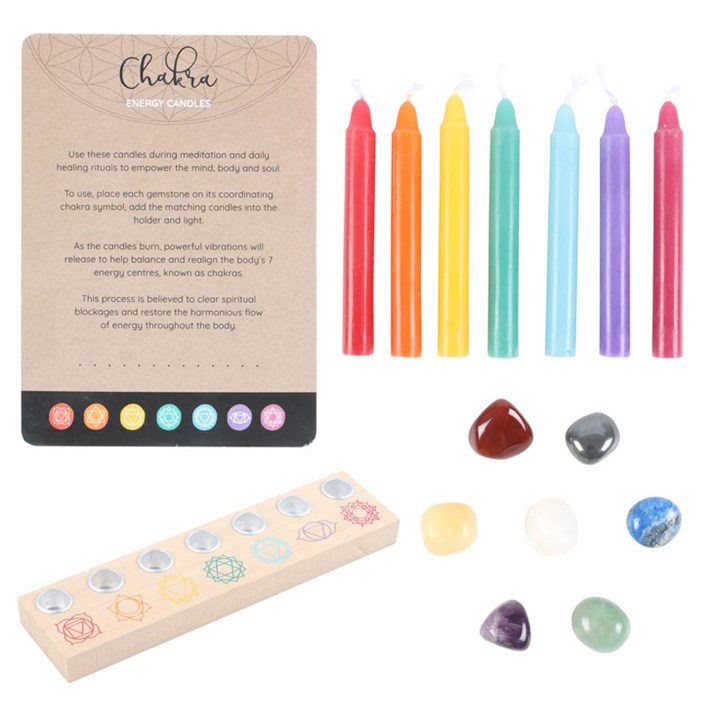
Shop the Chakra Energy Candle and Crystal Gift Set.
Ready to dive in? Start with altar cloths, then browse the full shop. Free UK delivery on orders over £30. New here? Join our newsletter for a first-order code.
No. Most working altars in UK homes live on a bedside table, a shelf, or the end of a bookcase. What matters is reach — if you have to move things to use it, you’ll use it less. A dedicated table only becomes necessary once you’re laying out grids or working with several tools at once.
Yes, and it’s one of the best places to start because it gets light and you pass it daily. The two cautions: direct sun fades dyed stones and coloured candle wax fast, and anything fabric-based will get damp in winter condensation. A small cloth under everything solves the second problem.
Use a box altar. A shallow gift box or a wooden tray kept on a shelf or under the bed, laid out when you use it and closed afterwards keeps everything together and portable. People sharing a house, or living with children or pets, often prefer it — and it travels, which a fixed altar doesn’t.
Under £40 buys everything you need: a cloth, a candle with a holder, a small bowl and one stone. Most of the cost is the holder, which is the piece beginners skip and then regret. You can spend £90 or more, but the extra pieces are additions rather than essentials.
Whatever the altar is for. If it’s a place for quiet, the centre is the candle. If it’s for seasonal work, the centre changes with the sabbat. If it’s a working altar, the centre is the bowl or cauldron where the working happens. Avoid filling the centre with decoration — you need the space to put things down.
Join our list for a first-order discount and early access to new pieces.
