
Our Location
304 North Cardinal St.
Dorchester Center, MA 02124

Which crystals are actually used for sleep and anxiety, how to place them in a bedroom, and the bedtime routine that does more for you than the stones ever will.

Crystals don’t cure insomnia. No stone under your pillow will fix a bad sleep schedule, and anyone promising otherwise is selling you something. What crystals are genuinely good for is ritual — a physical object that marks the boundary between the day and going to bed. The people who report the best results are the ones who built an evening routine around a stone, not the ones who bought an expensive one and hoped.
So this guide covers both halves: the stones traditionally used for sleep and anxiety, and the routine that makes them useful.
The default answer, and deservedly. Amethyst is the calming stone — the one you’ll find in every crystal shop and on every bedside table. It’s associated with the third eye and crown, which in plain terms means it’s the stone people reach for when their mind won’t switch off. Keep it on the nightstand where you can see it, rather than under the pillow.
Pale, pearly and tied to the moon and to cycles — a natural fit for anything sleep-related. Moonstone suits an evening ritual better than a fighting-one’s-pillow approach: hold it during a wind-down, then leave it by the bed.
The underrated one. Howlite is a white, veined stone traditionally used for settling a busy mind — it’s the stone for the 2am overthinking spiral. It’s inexpensive, which means you can keep one in a pocket during the day and one by the bed without thinking about it.
Not a sleep stone in the classic sense, but the one for anxiety that comes from emotional churn — arguments, grief, a hard week. Rose quartz by the bed is about the room feeling kinder, and that’s not nothing at 11pm.
The amplifier. If you’ve already got a routine and a stone you like, clear quartz is traditionally used to strengthen whatever it sits with. It’s also the easiest stone to find in any size.
For how the stones map to the body’s energy centres, the seven chakras guide covers the third eye and crown in more detail.
That’s it. Three steps, no equipment, and it takes about three minutes a night. People who do this consistently report falling asleep faster than people who own a drawer full of stones they never touch.
Crystals work better when the bedroom agrees with them:
If sleep is genuinely bad — persistent insomnia, anxiety that interferes with daily life — the honest advice is the boring stuff: consistent bed and wake times, no caffeine after early afternoon, a cool room, screens out of the bedroom, and a conversation with a GP if it’s been going on for weeks. Crystals sit alongside all of that, never instead of it.
Buy one stone, not seven. Amethyst is the safe first choice; howlite if your problem is specifically a racing mind. Put it on the nightstand tonight, cleanse it tomorrow, and give the routine two weeks before you judge it. For more on choosing stones by intention, the crystal gift guide explains the traditional meanings behind the most common stones.
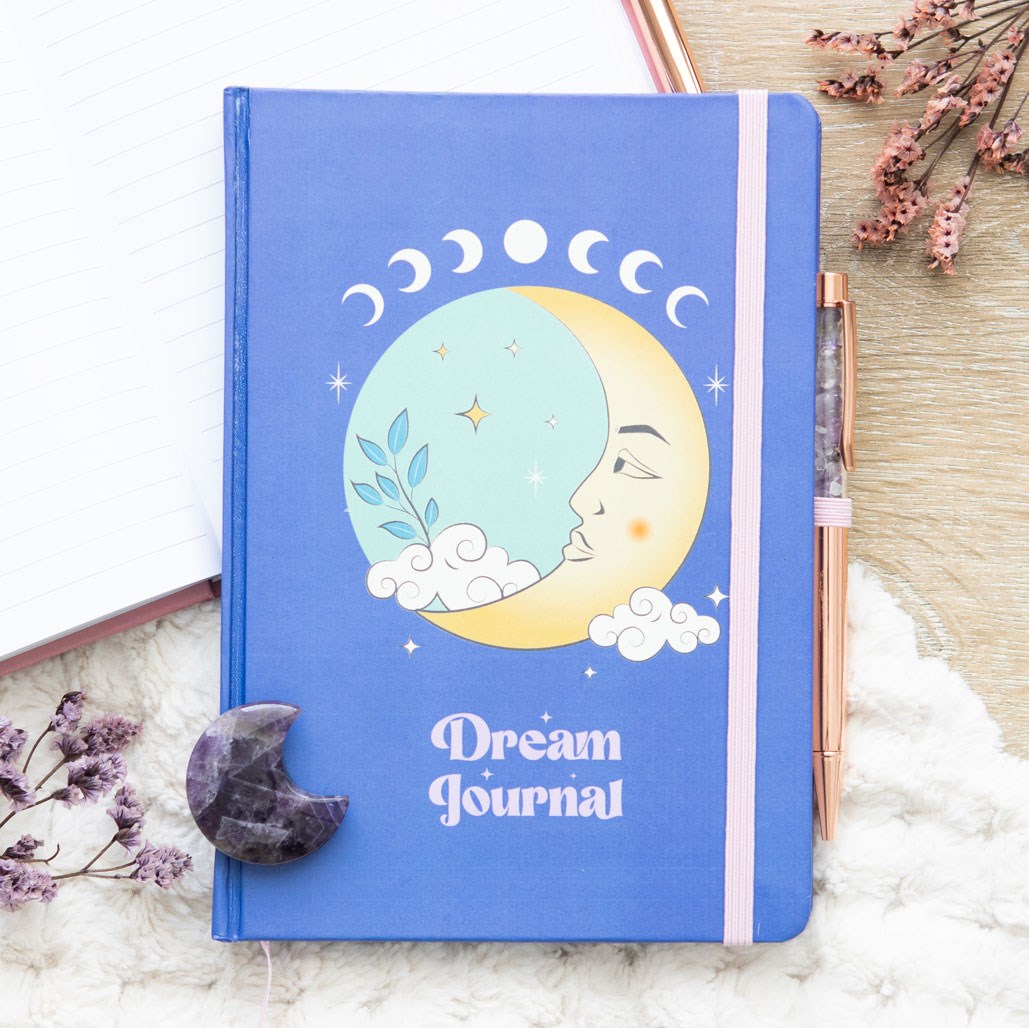 The Moon Dream Journal with Amethyst Pen£9.99Shop Now
 5cm Amethyst Moon Phase Crystal Point£13.99Shop Now
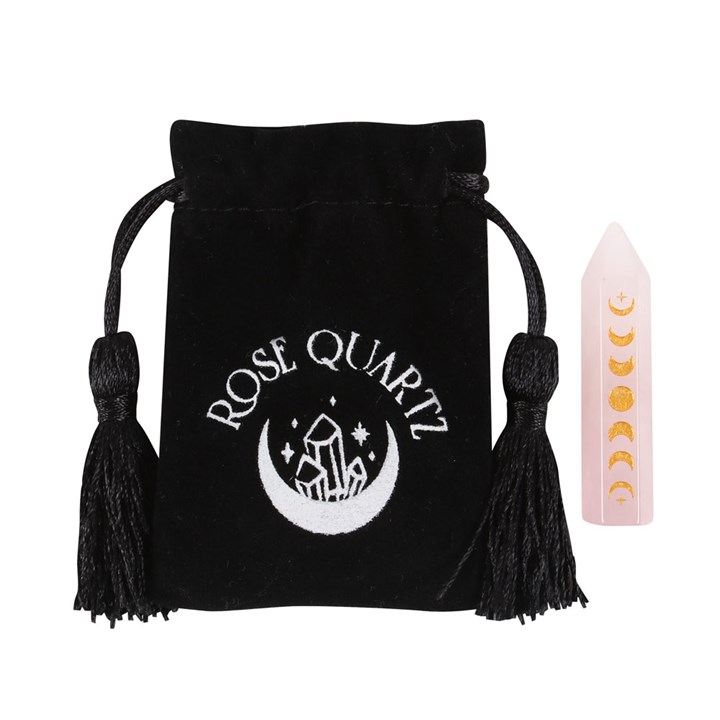 5cm Rose Quartz Moon Phase Crystal Point£13.99Shop Now
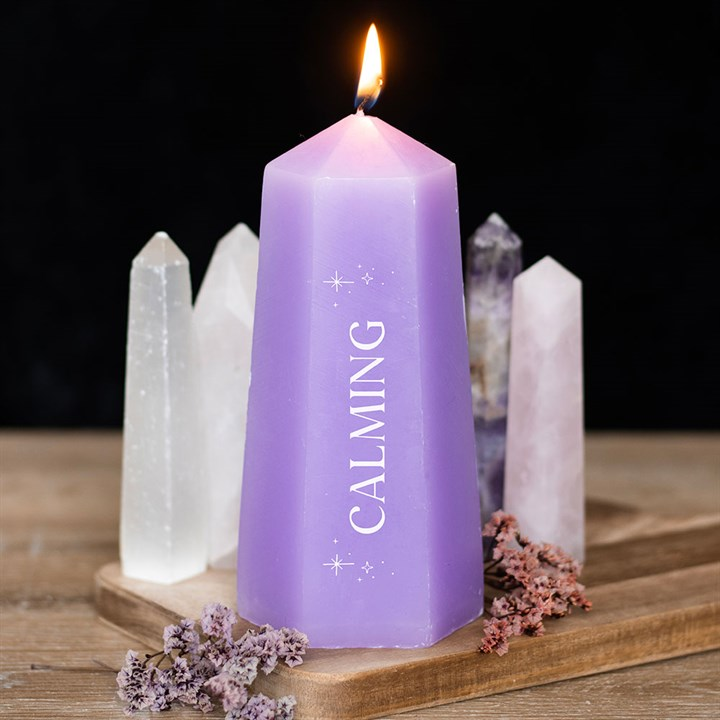 Calming Crystal Candle with Rough Amethyst£18.99Shop Now
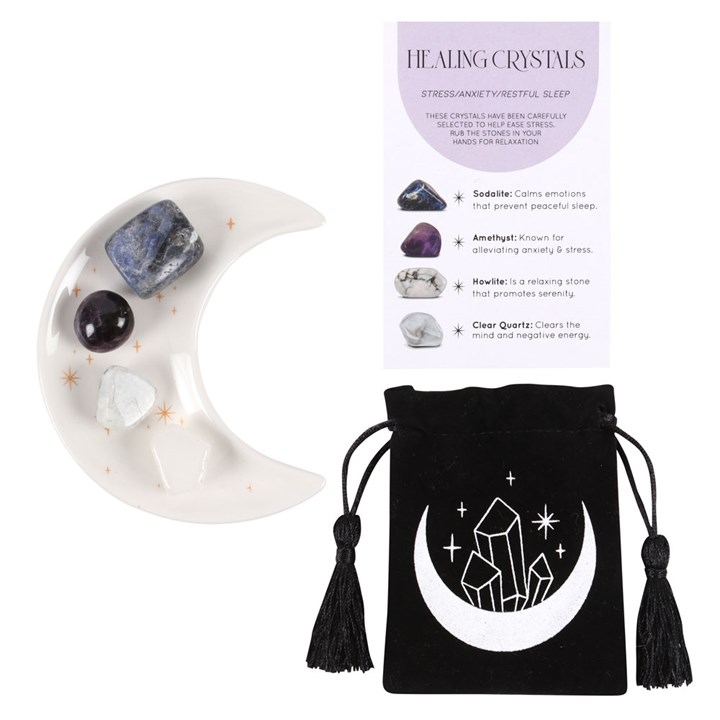 Stress Relief Crystal Set with Moon Dish£20.99Shop Now
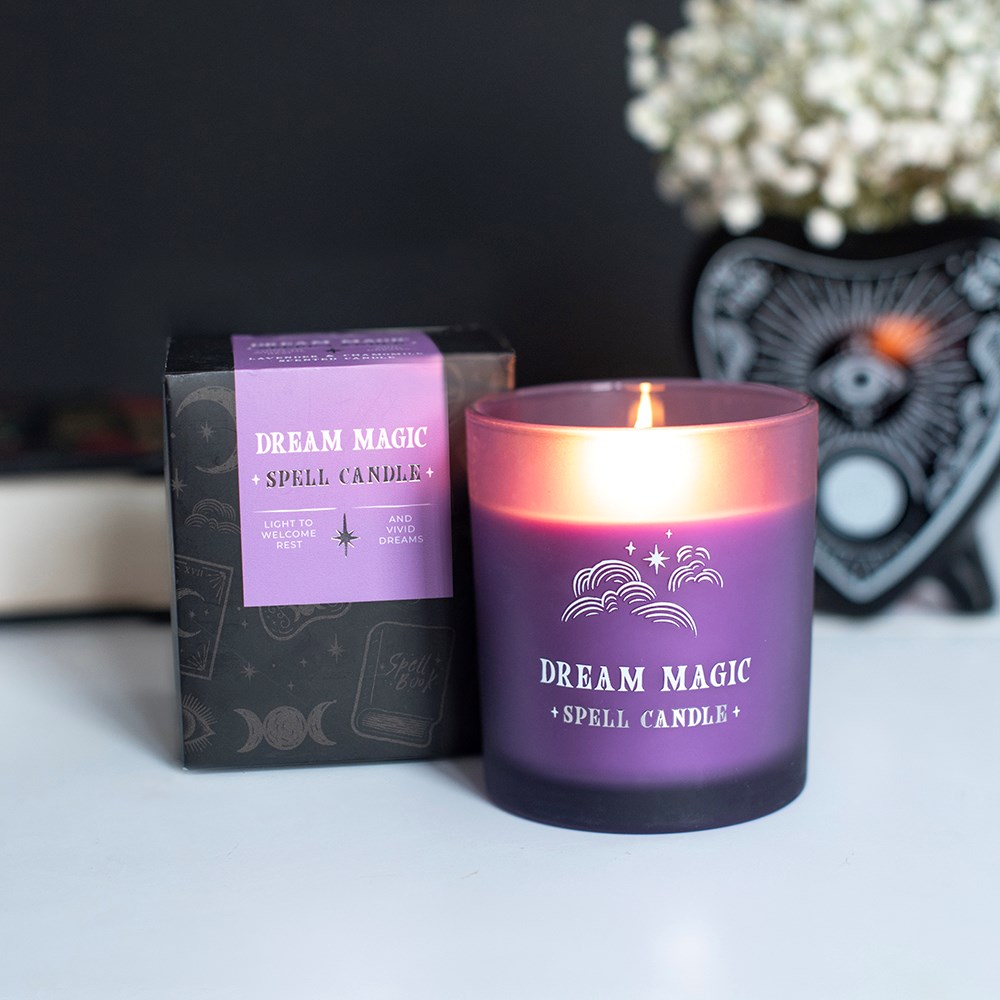 Dream Magic Lavender & Chamomile Scented Candle£9.99Shop Now
Join our list for a first-order discount and early access to new pieces.
